
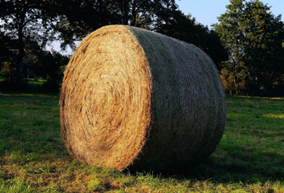
Net Wrap’ High UV Inhibitor Ratings for Outdoor Storage in Arid Red-Calcarosol Regions
Bales stored outdoors across Australia’s arid farming regions face intense solar exposure, particularly where shade or covered storage is limited. On the Eyre Peninsula and in Far West NSW, prolonged ultraviolet radiation can gradually weaken polymer structures, reducing the strength and reliability of agricultural netting. High-performance net wrap is designed to resist this degradation through carefully formulated polymers and UV stabilisers.
For producers leaving bales exposed between harvest and feeding, understanding UV resistance is essential. A net wrap that maintains tensile strength in sustained sunlight can help preserve bale shape, reduce handling problems, and provide more dependable protection during outdoor storage.
Why UV Exposure Matters for Net Wrap
Ultraviolet radiation can break down polymer chains within polyethylene products. This process, known as photodegradation, can make the material weaker, less flexible, and more susceptible to tearing.
The effect is particularly important when round bales remain uncovered for extended periods. Once the net wrap loses tensile performance, handling with loaders, transport equipment, or feeding machinery can place additional stress on already weakened areas.
The rate of degradation depends on several factors, including:
● UV intensity and duration of exposure
● Polymer formulation
● Concentration and quality of UV stabilisers
● Film or tape construction
● Storage conditions and seasonal temperatures
● Mechanical stress during baling and handling
UV Stabilisation in High-Performance Net Wrap
A high-performance net wrap uses polymer formulations designed to retain mechanical properties for longer during outdoor exposure. UV stabilisers work within the polymer to reduce damage from ultraviolet radiation, helping slow the loss of tensile strength.
However, UV resistance should not be judged simply by a label stating that a product is “UV stabilised.” Suppliers should provide technical information about the product’s intended exposure period and applicable storage conditions.
For Australian producers, this is especially relevant when comparing UV-stabilised, high-performance net wrap SA NSW products for exposed storage. A product intended for short-term outdoor use may not provide the same level of protection as one designed for demanding agricultural conditions.
Consider More Than UV Resistance
UV stability is only one part of net wrap performance. A suitable bale wrapping product should also provide consistent stretch, reliable edge coverage and resistance to tearing during baling.
When assessing a product, ask suppliers about:
● UV stabilisation specifications
● Tensile and tear performance
● Recommended outdoor exposure period
● Bale compatibility and application settings
● Product testing and quality-control procedures
● Suitable storage conditions after baling
Eyre Peninsula and Far West NSW Considerations
Agricultural operations across the Eyre Peninsula and Far West NSW can experience strong solar exposure and dry conditions. Where bales are stored uncovered, the net wrap is directly exposed to environmental stresses rather than protected by sheds, tarpaulins, or other coverings.
A high-performance net wrap can provide an additional margin of protection by retaining its structural properties for longer. This does not eliminate degradation, however. Producers should still follow the manufacturer’s recommended storage period and avoid assuming that UV stabilisation makes net wrap permanently weatherproof.
Bale placement also matters. Keeping bales away from unnecessary abrasion, sharp surfaces and excessive mechanical contact can reduce additional stress on the netting.
Choosing Net Wrap for Uncovered Bale Storage
For producers comparing UV-stabilised high-performance net wrap SA NSW options, technical documentation is more useful than marketing claims alone. Look for clear specifications covering polymer quality, UV stabilisation and mechanical performance.
The right product should match the expected storage duration, local climate and baling system. Where uncovered storage is unavoidable, selecting net wrap specifically suited to prolonged outdoor exposure can help maintain bale integrity and reduce avoidable handling problems.
Conclusion
Strong UV resistance is an important consideration when bales remain exposed across Australia’s arid agricultural regions. A high-performance net wrap with appropriate UV stabilisation can help slow polymer degradation and maintain tensile performance during outdoor storage. For operations across the Eyre Peninsula and Far West NSW, compare technical specifications carefully and choose a product rated for the expected exposure conditions.
Speak with a reputable agricultural packaging supplier to confirm the appropriate UV-stabilised, high-performance net wrap SA NSW solution for your baling equipment, storage period, and local conditions.
—
Frequently Asked Questions
1. Why is UV resistance important in net wrap?
UV radiation can gradually degrade polyethylene polymers, reducing tensile strength, flexibility and resistance to tearing.
2. Is UV-stabilised net wrap suitable for uncovered bales?
It can be suitable for outdoor storage when the product is specifically rated for the expected UV exposure and storage duration.
3. What affects net wrap UV degradation?
Solar exposure, polymer formulation, UV stabiliser performance, temperature, storage duration and mechanical stress can all influence degradation.
4. Should net wrap be selected differently for arid regions?
Yes. Areas with intense solar exposure may require products with stronger UV stabilisation and documented outdoor performance.
5. What should Australian farmers ask suppliers about UV-resistant net wrap?
Ask for UV stabilisation specifications, tensile performance, recommended exposure periods and guidance for the relevant baler and storage conditions.


You May Also Like

Pallet Freezer Spacers’ Enhancing Cold Storage Efficiency for Australian Businesses
Stockinette Bags’ Essential Solutions for Australia’s Agriculture and Mining Industries
